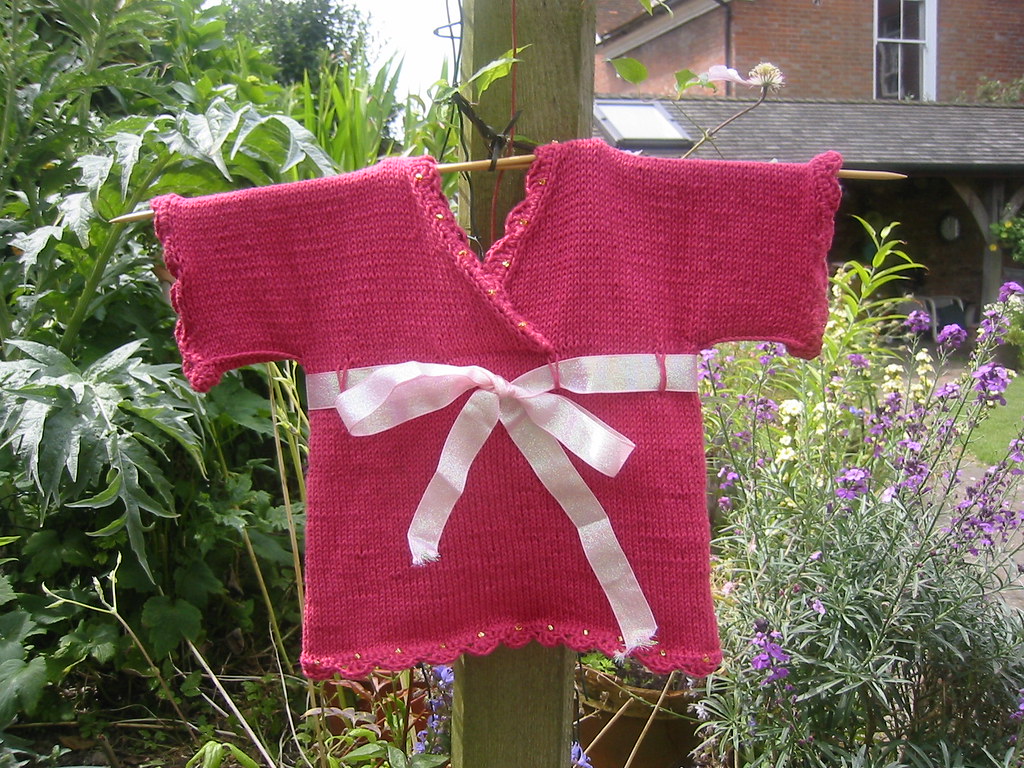
Noblin activity of the knitting variety.

Including Noblin Designs, How to identify Noblins,
Advice on how to catch a Noblin, and How to keep your Noblin happy.

Monday, August 10, 2009

Excessive

I like to knit socks using 5 double pointed needles. I've had a go at magic loop, two circulars and a combination of dpns and circulars but really, 5 needles is best for me. So when a pattern calls for two cable needles and I've already got 5 needles on the go, I call that excessive.

Vilai is one such pattern. Actually, I've never seen a cable that called for two cable needles before but these are very gorgeous socks so you can forgive them for being demanding. I've devised a method for knitting this specific cable within this pattern without using any cable needles and thought I'd share it. It's nothing new and not the most elegent of solutions but I'm rather fond of it. It's not an introduction to cabling without a cable needle (jeez, there's got to be a quicker way of saying that) so if you're not familiar with the technique you might want to have a read of this and a little practise before you embark on my method.

Step 1: I split the sts evenly over the four dpns, 18 on each.


Step 2: Work to the last three stitches on the first dpn. This dpn becomes a surrogate cable needle (see, not terribly elegant as the dpn is a bit long and pokey, but it gets the job done). Move this dpn to the front of the work.

Step 3: With yarn in front, slip the next stitch purlwise. This is the purl stitch that would have gone on the second cable needle.

Step 4: Work the next three stitches, k1tbl, p1, k1tbl. They are the purple ones below and the slipped purl stitch is the pink one.
Step 5: Slip the three stitches from the "cable" needle to the LH dpn. You now have a free dpn.

Step 6: This is the arrangement of stitches so far.

Step 7: This is where you use the cabling without the cable needle technique. WYIF insert the free dpn into the back of the slipped purl stitch. (I forgot to WYIF at this stage so the photo isn't completely accurate.)

Step 8: Hold on tight to the first four stitches and slip them right off the RH dpn. If you don't hold on, all kinds of chaos can spring forth (that didn't make it into any photos because it's hard to rescue knitting and photograph it at the same time).

Step 9: Quick as you like, slide the RH needle back into the three left most stitches only, i.e. the stitches that were waving around in the air and not the purl stitch already on a dpn.

Step 10: Purl the stitch on the back needle. Nearly there! You now have a free dpn again.

Step 11: Continue with the free dpn, working the rest of the stitches. Voila!


I have to admit, that after the previous post, I couldn't face tinking. I'd already had the socks on hold for several days while I had to find my camera and then charge it's battery and then find my circular needle/secret weapon so I really wanted to get moving again.
After two pattern repeats, it seems to fit well so I'm sticking with the 2.5mm dpns. If anything, it's slightly tight at the top edge.
Such a pretty pattern!

Labels: , , ,

Friday, August 07, 2009

Dreaming*

*Warning - this is a very wiffly and self indulgent post. It started out as an honest attempt to be something useful but has become bloated, lethargic and a prime example of poor editing. The author takes no responsibility for anyone falling asleep whilst reading. Just don't operate any heavy machinery.

After being in a huff with work on Wednesday, I had a bad dream about it and went to work on Thursday very tense. I was running through my mind things I would say in my defense if necessary. It wasn't necessary - everyone was friendly and kind as usual. I had a dream the night before where Matthew McConaughey stabbed me several times but then I told him I loved him, just didn't think he should be king, and eventually we lived happily ever after (albeit with a few extra scars). That one didn't come true either.

I have very vivid dreams that I tend to remember. I also daydream frequently, which sometimes leads to a bit of trouble. See exhibit A:

Exhibit A: One extra stitch
1 extra stitch

I was knitting Vilai late into the evening (about 9.30pm), my mind wandering off the chart pattern into the realms of knitting fantasy. It went something like this...

I'm really getting the hang of this pattern, gosh, I'm so good, I understand it really well, what a pro, I don't really need the chart anymore, ooh look, I got that bit right without even thinking about it, well done me, I wonder if anyone else manages it as easily as I do, perhaps they would like some encouragement, maybe I should blog about the pattern and deconstruct it for people, then I'd be really popular, I'd tell them pattern has several distinct sections which reduces the need to look at the chart, quick look at the chart, yup am right again, hooray for me, I'm the king of knitting these socks, it's a great pattern, really well written, (should I go do the washing up?), practically knits itself but people might be put off by the chart, it looks complex but really it's easy, I could be the bridge between this pattern and the world, I would be a hero...oh...I've got an extra stitch...um...did I forget a SSK two rounds back?.

So instead of blogging about the actual pattern, I'm now thinking about how to correct the mistake. I can't just ignore it as the pattern is detailed and beautiful and eventually the mistake will cause bigger problems. Like me not wanting to finish the sock ever.

I see myself has having three options of varying ease and effect.
Option 1: Throw in an extra decrease right now. This is the easiest thing to do and as a decrease is next anyway, it won't look too out of place in the pattern.
Option 2: Drop the stitches down and correct the pattern. This is a bit more involved and there is a payoff to be had. Although the pattern will be technically correct, the stitches will be looser as where there were two stitches, there will only be one, with extra yarn making it look sloppy.
Option 3: Rip back several rows and knit it properly. This involves the most work and isn't foolproof although would give the best result. I've frogged patterns before and I seem to have a marvellous capacity to drop extra stitches, pull the needle out at the wrong point and generally make a simple extra stitch into ladders, lost patterning and all sorts of ensuing chaos.

To better decide which path to choose, I thought I'd compare them, scientifically. That means with photos.

Here's what Option 1 looks like:
Option 1: SSSK instead of SSK

This doesn't look out of place and would be unnoticable to most eyes. It's in the style of the pattern and would probably be perfectly acceptable. However, it breaks up the line of the decreases, which should be smooth and even. Instead, there is a vertical section then an abrupt left turn.

I didn't want to judge it just on that row, so worked the next plain and patterned row.

I know what you're thinking - it looks fine, stop time wasting. Well I decided to forge ahead and try Option 2. In two varieties.

First: dropping down one round instead of two, adding in a SSK thus correcting the stitch count and reducing the abrupness of the left lean.

Dropping the stitches one row
My tip is to hold on to the knitting and don't let the stitches run any further than you intended. Then get them back onto a needle as quickly as you can.

Back on the needle, loop of yarn visible in front

Minor rearranging, yarn loop ready at the back
If I had been about to purl, this stage wouldn't have been necessary but when you're about to recreate a knit based stitch, you need the yarn at the back.

Needles ready in the SSK position

Hooking the loop of yarn around the RH needle

SSK knit corrected on round below, one purl stitch not two

Current round knitted
Yeah, yeah looks great. There is sloppiness on the row below but it's minor and would probably correct itself over time. But why stop now???

Dropping stitches down two rounds

Stitches on needle, two yarn loops visible
At this stage, it's very helpful that the yarn is slightly different colours on the different rounds. This helps you keep track of which loop to use first.

SSK corrected on the correct round

Following round corrected - Um lookout sloppy stitches

Stop now - you have to go see your Mum
This is where I stopped. I had to go out and frankly, was worried about doing more damage. This correction is my least favourite, nasty sloppy stitches, but there is potential for fiddling a bit more with it and spreading out the extra stitch worth of yarn over more than one stitch. Anyway, there comes a time when you have to just put the knitting down and step away from the sock.

What did we learn from this experience?
When you make a mistake you have several options where you have to make a personal decision about speed, simplicity, final appearance, can you live with yourself, and does it really matter. I couldn't have lived with option 1, am not happy with option 2 so I can see where I'm talking myself into. Option 3 and The Dangerous World of TINKing.

Labels: , , ,